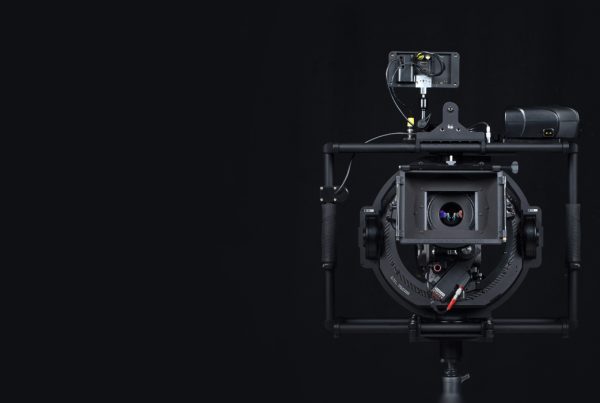
TRINITY 2 was created around a simple idea: give camera operators more freedom to move without forcing the shot – or the camera package – to conform to the limitations of the stabilization system.
That concept has since been recognized at the highest levels of both the motion picture and television industries. In 2025, the Academy of Motion Picture Arts and Sciences honored the development of TRINITY 2 with a Scientific and Engineering Award, followed in 2026 by an Engineering, Science & Technology Emmy® Award recognizing its impact on television production.
Those awards celebrate what TRINITY 2 has already accomplished. The Pan Axis shows how the platform continues to evolve.
Now available directly from FoMaSystems at a special price, Pan Axis adds a stabilized third axis to TRINITY 2, extending the system beyond its familiar body-worn configuration and into compact, fully stabilized remote-head applications.
More Than a Third Axis
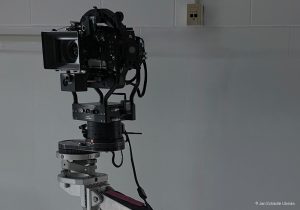
At its core, TRINITY 2 is built around electronically stabilized tilt and roll axes, while pan remains mechanically controlled by the operator during traditional body-worn operation. This preserves the direct relationship between operator and camera while adding electronic stabilization, control, and repeatability where they provide the greatest advantage.
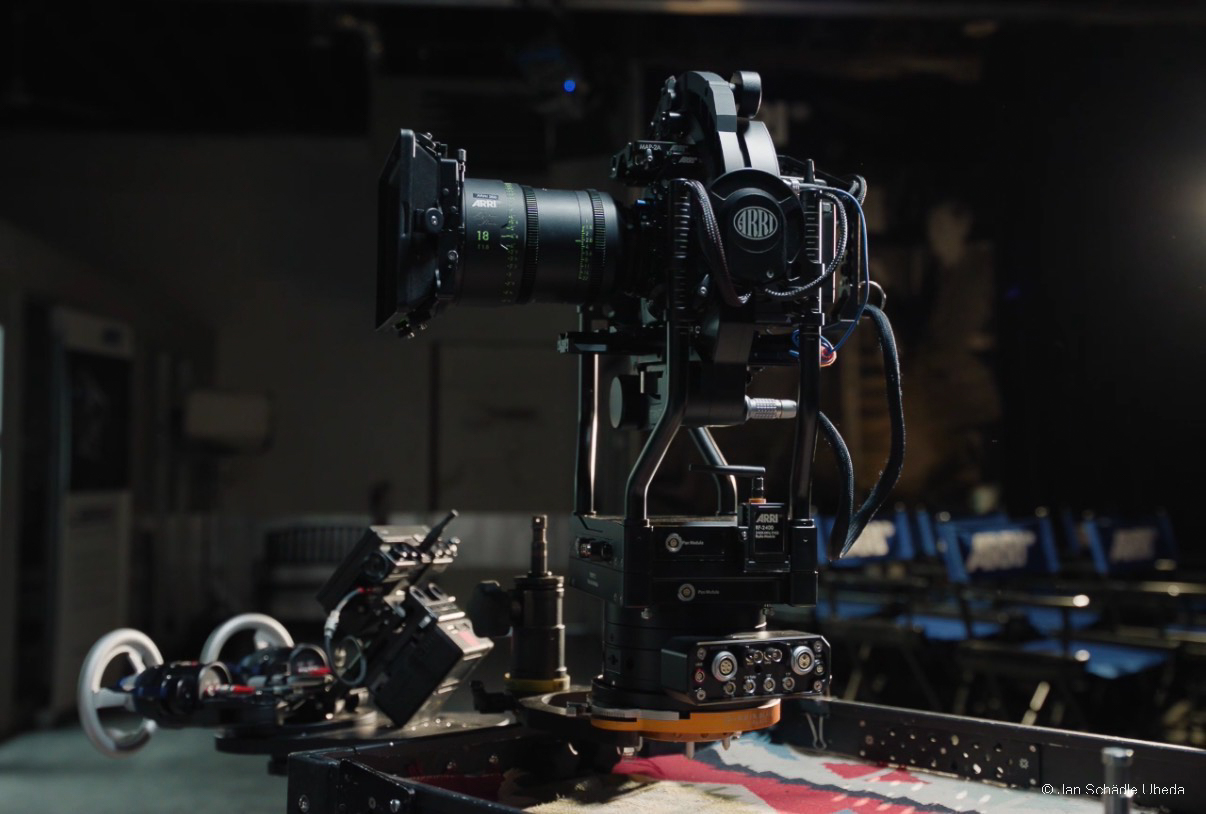
Pan Axis extends that architecture by adding electronically stabilized pan when the application requires it. The result is a system capable of moving between the freedom of body-worn operation and the precision of a compact 3-axis stabilized remote head.
That efficient modularity is not simply the result of adding another motor. It comes directly from the mechanical architecture of TRINITY 2: its Order of Axis.
Order of Axis: Designed for Modularity
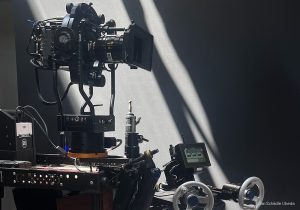
With Pan Axis installed, TRINITY 2 follows a Pan → Tilt → Roll order of axis.
Pan forms the outermost stabilized axis around the existing Tilt → Roll assembly. Because of this arrangement, the Pan Axis can be added or removed while the fundamental stabilization architecture at the center of TRINITY 2 remains untouched, including the camera package.
Without Pan Axis, the Tilt → Roll assembly forms the body-worn TRINITY 2, with pan controlled mechanically by the operator. Add Pan Axis around that same assembly and the system becomes Pan → Tilt → Roll, providing stabilized pan for hard-mount and remotely operated applications.
The third axis therefore extends the architecture already present in TRINITY 2 rather than creating a separate stabilization platform. This is what allows Pan Axis to broaden the role of the system while retaining the same core TRINITY 2 technology.
A Stabilization System Built to Adapt
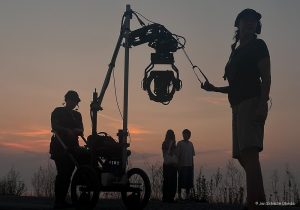
The versatility of TRINITY 2 goes well beyond its physical configuration. Its electronic stabilization and control system gives operators the ability to quickly set up movement, tune the response of the system, or program repeatable movements when a shot demands greater precision.
TRINITY 2 also provides continuous 360° roll, opening creative possibilities that extend beyond conventional body-worn camera movement and can be incorporated into both manually operated and programmed shots. More importantly, it allows the operator to move around the camera to further extend the possibility of connecting dynamic shots with TRINITY 2.
With SUP 4.0, that flexibility extends further into the way TRINITY 2 can behave during the shot itself. Follow Mode can be activated in tilt and roll to allow the camera to respond more naturally to the operator’s physical movement, while retaining subtle electronic stabilization. The operator can move between the characteristic electronically stabilized behavior of TRINITY 2 and a more mechanically responsive operating feel as the shot develops.
It is one example of how software has continued to expand the creative range of the same hardware platform.
Click here to see the Tech Talk YouTube Video about the TRINITY 2 Pan Axis..
From Body-Worn to Hard-Mounted
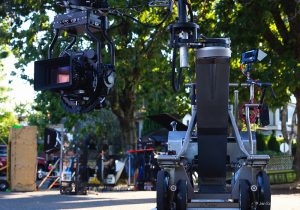
The practical advantage of Pan Axis becomes especially clear on productions where the way the camera needs to move changes from one platform to the next.
TRINITY 2 may be operated body-worn for shots that require the operator to move directly with performers, transition between lens heights, navigate confined spaces, or travel freely through a set or live environment. For another setup, the camera may need to move to a dolly, crane, vehicle, tracking platform, cable system, or another hard-mounted application that requires remote operation.
Adding Pan Axis gives the system the stabilized pan and remote-control capability required for those applications without requiring the operator to move to an entirely different stabilization platform. The camera package, stabilization system, electronics, and familiar operating environment can remain centered around TRINITY 2 as the application changes.
Remote Control, Built into the TRINITY 2 Ecosystem
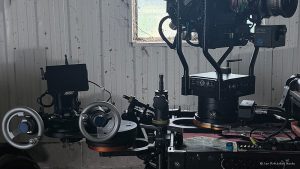
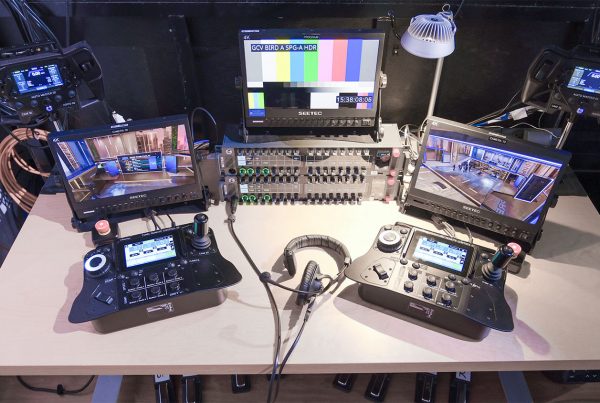
Once TRINITY 2 is hard-mounted with Pan Axis, pan, tilt, and roll can be commanded remotely, opening a range of operating methods suited to different shots and platforms.
The compact RCP-3 delivered with TRINITY 2 provides access to system configuration and remote operation. For operators who prefer traditional wheel control, the system can also be operated using ARRI DRW Wheels, providing a familiar interface for precise remote-head movement.
PanBar and external joystick control provide additional ways to operate the system depending on the production and mounting configuration, while wired and wireless workflows allow the control position to be separated from the camera platform when direct physical operation is impractical.
Together, these options allow the control method to adapt to the application – from direct body-worn operation to precisely controlled remote movement – without losing the familiarity and award-winning stabilization of the TRINITY 2 ecosystem.
One System Across More of the Production

Pan Axis ultimately expands the situations in which an operator can deploy TRINITY 2.
A sequence may call for the physical freedom of body-worn operation, another for programmed or repeatable movement, and another for a hard-mounted camera operated remotely. TRINITY 2 can address these different requirements through the same underlying stabilization and workflow.
For the operator, that means more creative and practical options from the system they already know: direct physical camera movement when the shot calls for it, electronic stabilization and programmable movement when precision is required, and a third stabilized axis when the camera needs to leave the operator and move onto another platform.
For production, that means greater efficiency across changing setups: less time spent switching between specialized equipment, fewer separate systems required for specific sequences, and the ability to carry the same camera package and stabilization platform from body-worn operation to hard-mounted remote movement as the demands of the shot change.
Pan Axis is therefore more than an accessory.
It completes a modular concept built into TRINITY 2.
The Continuing Evolution of TRINITY
TRINITY has always been about expanding the possibilities of stabilized camera movement. TRINITY 2 carried that concept forward with a platform that has found its place across feature films, live television, awards shows, concerts, sports, and major productions around the world.
Recognition from the Academy in 2025 and the Television Academy in 2026 celebrates the impact that technology has already made. Pan Axis represents the continuing evolution of the platform: not by changing what TRINITY 2 is, but by extending where and how an operator can choose to use it.
Pan Axis – Now Available Directly from FoMaSystems
The TRINITY 2 Pan Axis is now available directly from FoMaSystems at a special price of EUR 15,990 plus any applicable taxes / tariffs and shipping costs. Click here to open the Onlineshop.
For existing TRINITY 2 owners, Pan Axis provides a direct path to expanding the applications of the system they already own – adding stabilized pan and remote-head capability while remaining within the familiar TRINITY 2 ecosystem.